

What Does a Pelican Keep in Its Pouch? The Ocean's Most Surprising Fisher
What Does a Pelican Keep in Its Pouch? The Ocean's Most Surprising Fisher
The pelican's enormous throat pouch is one of the most recognisable features in the bird world — and one of the most misunderstood. Many people assume pelicans use their pouches to store fish, like a lunchbox. But the truth is far more interesting. Let's explore the remarkable biology of one of the world's most ancient and successful birds.
The Pouch — A Net, Not a Lunchbox
A pelican's pouch can hold up to 13 litres of water — about three times the capacity of its stomach. But pelicans don't store fish in their pouches. Instead, the pouch works as a fishing net. When a pelican plunges its bill into the water, the pouch expands dramatically to scoop up water and fish together. The pelican then tilts its head to drain the water out through the sides of its bill, leaving the fish behind to swallow.
The whole process takes just seconds. A pelican can catch and swallow a fish in one smooth motion before a nearby seagull has a chance to steal it.
Two Very Different Fishing Styles
Different pelican species use different hunting strategies:
- Brown pelicans are dramatic plunge divers, climbing to heights of up to 20 metres before folding their wings and diving headfirst into the water at high speed. Air sacs under their skin cushion the impact.
- White pelicans (including the Australian pelican) prefer cooperative fishing — groups of pelicans form a line or horseshoe shape and herd fish into shallow water, then scoop them up together.
The Australian Pelican
The Australian pelican (Pelecanus conspicillatus) is found across Australia and is one of the world's largest flying birds. It has the longest bill of any bird — up to 47 cm long. Despite their size, Australian pelicans are graceful fliers, soaring on thermal currents for hours with barely a wingbeat.
Fascinating Pelican Facts
- Pelicans are among the world's oldest bird families — fossils show they've existed for over 30 million years, virtually unchanged.
- They have a wingspan of up to 2.5 metres.
- Pelicans are highly social, nesting in large colonies and often fishing cooperatively.
- The pouch is also used for cooling down — pelicans flutter the pouch to increase evaporation on hot days.
- Baby pelicans are born completely naked and helpless, developing their distinctive features over several weeks.
Pelican Activities for Kids
- Pouch capacity: Fill a 13-litre container with water to visualise how much a pelican's pouch can hold. Compare to a standard water bottle.
- Cooperative fishing: Play a game where kids work together to herd a ball into a goal — discuss how white pelicans use the same strategy.
- Bill length: Measure out 47 cm and compare it to your own face. How would you manage with a bill that long?
- Ancient bird research: Research other bird families that have existed for millions of years. What makes them such successful survivors?
Dive Into Ocean Play
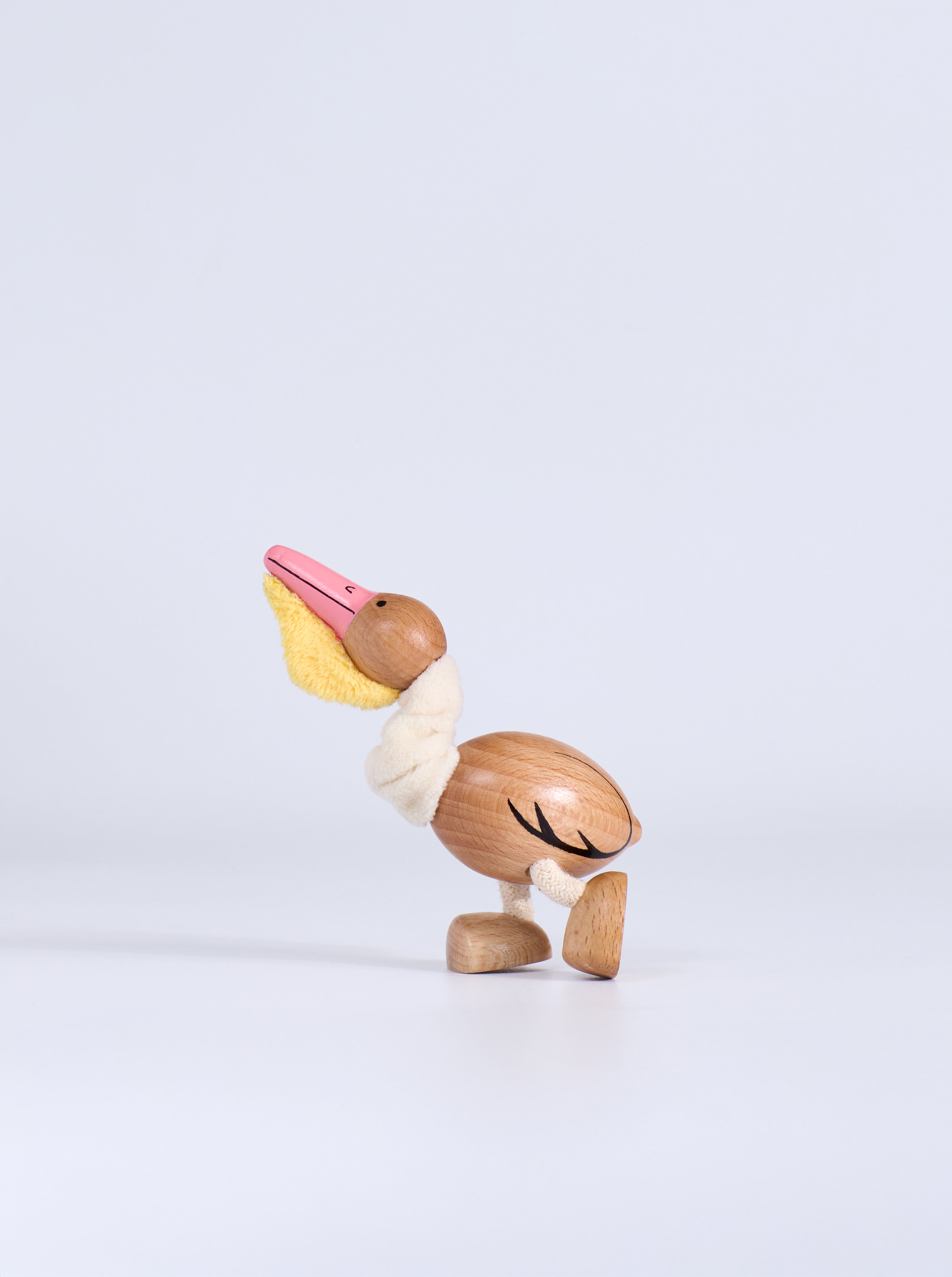
Our wooden pelican figurine is part of the Coral Bay collection — beautifully crafted from sustainably sourced timber, celebrating the wonders of the natural world.
Shop the Coral Bay Collection →
Further Reading & Resources
- BirdLife Australia — Australian Pelican — Australia's leading bird conservation organisation profiles the Australian pelican with detailed information on habitat, behaviour, and distribution.
- National Geographic — Pelican — facts, photos, and videos about pelicans, ideal for classroom research and independent reading.
- IUCN Red List — Australian Pelican — the authoritative conservation status assessment for the Australian pelican.
- Australian Geographic — Australian Pelican — a detailed profile of the Australian pelican from Australia's leading nature magazine.
- DK Find Out — Pelican — child-friendly, curriculum-aligned pelican facts perfect for primary school learners.
Explore more animal facts on our Ramblings blog.

Send us a note